
Chess puzzles are one of the best ways for children to improve their tactics, calculation, pattern recognition, and decision-making skills. But a common question parents ask is: How many chess puzzles should my child solve every day?
The answer depends on the child’s age, level, and training goals.
♟️ Recommended Daily Chess Puzzle Routine
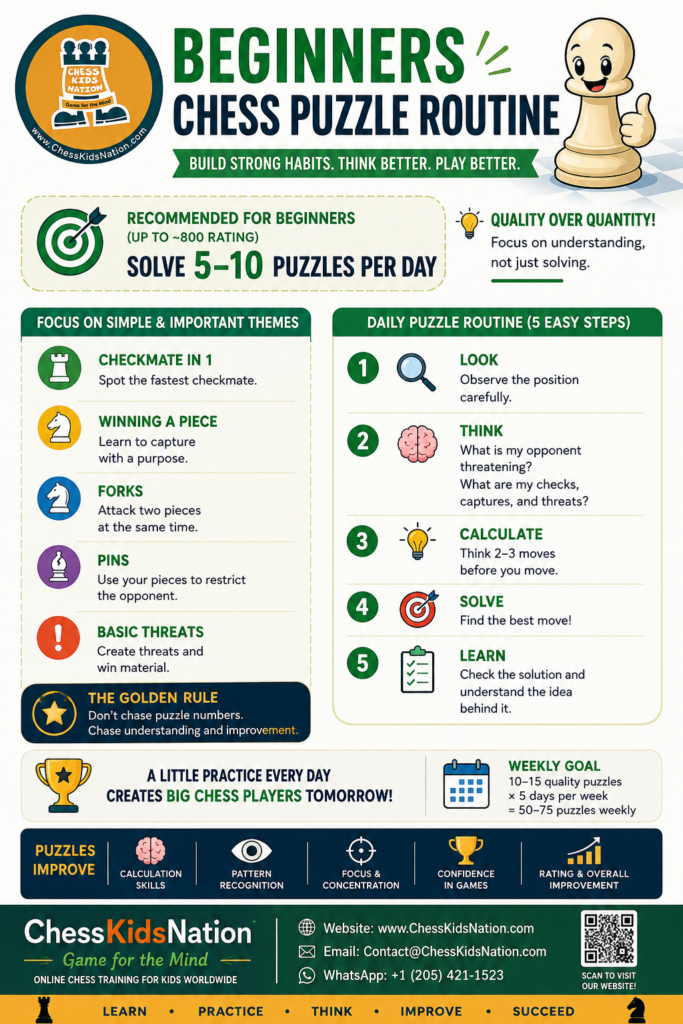
🟢 Beginners
5–10 puzzles per day
Focus on simple themes such as:
- Checkmate in 1
- Winning a piece
- Forks
- Pins
- Basic threats
The goal is understanding, not solving as many puzzles as possible.
🟡 Intermediate Players
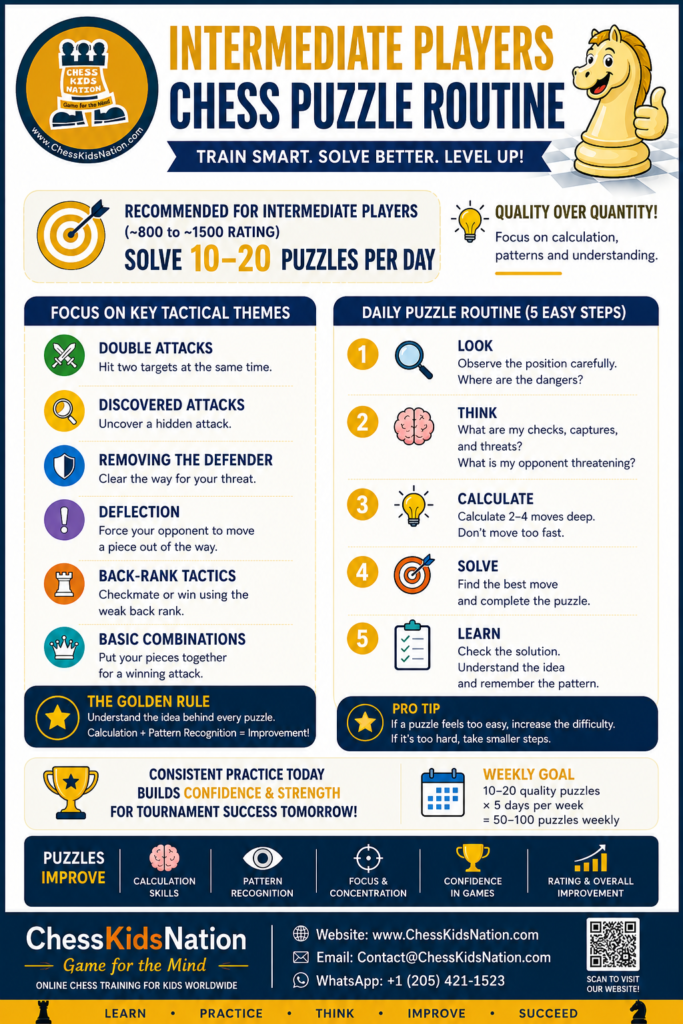
10–20 puzzles per day
Children can begin working on:
- Double attacks
- Discovered attacks
- Removing the defender
- Deflection
- Back-rank tactics
- Basic combinations
Encourage them to calculate before moving.
🔴 Advanced Young Players
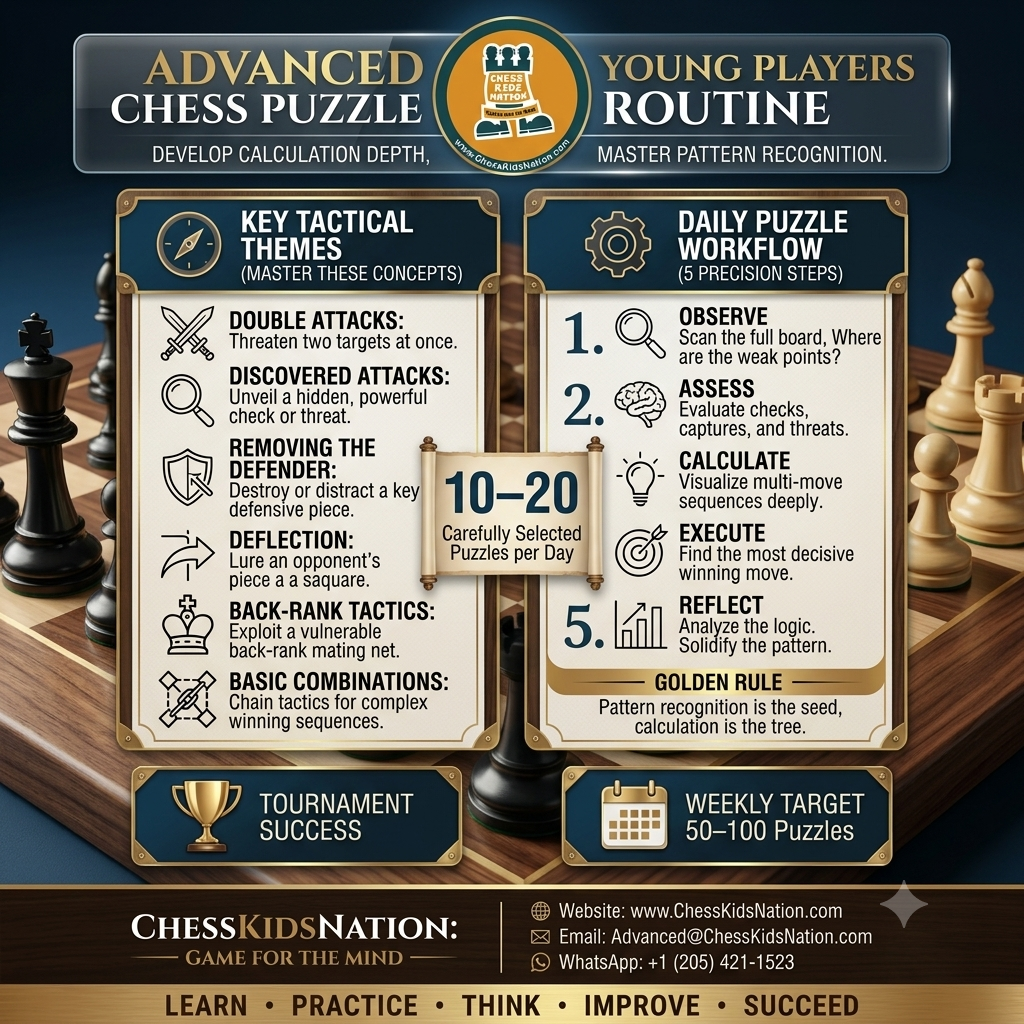
15–30 carefully selected puzzles per day
Stronger players should spend more time calculating difficult positions rather than rushing through dozens of easy puzzles.
Quality matters more than quantity.
🧠 Should Children Solve Puzzles Quickly?
Not always.
A child should first ask:
“What is my opponent threatening?”
“What checks, captures, and threats do I have?”
“What happens after my move?”
Taking 2–5 minutes on a challenging puzzle can be more valuable than solving 20 easy puzzles in a few minutes.
⭐ The Golden Rule
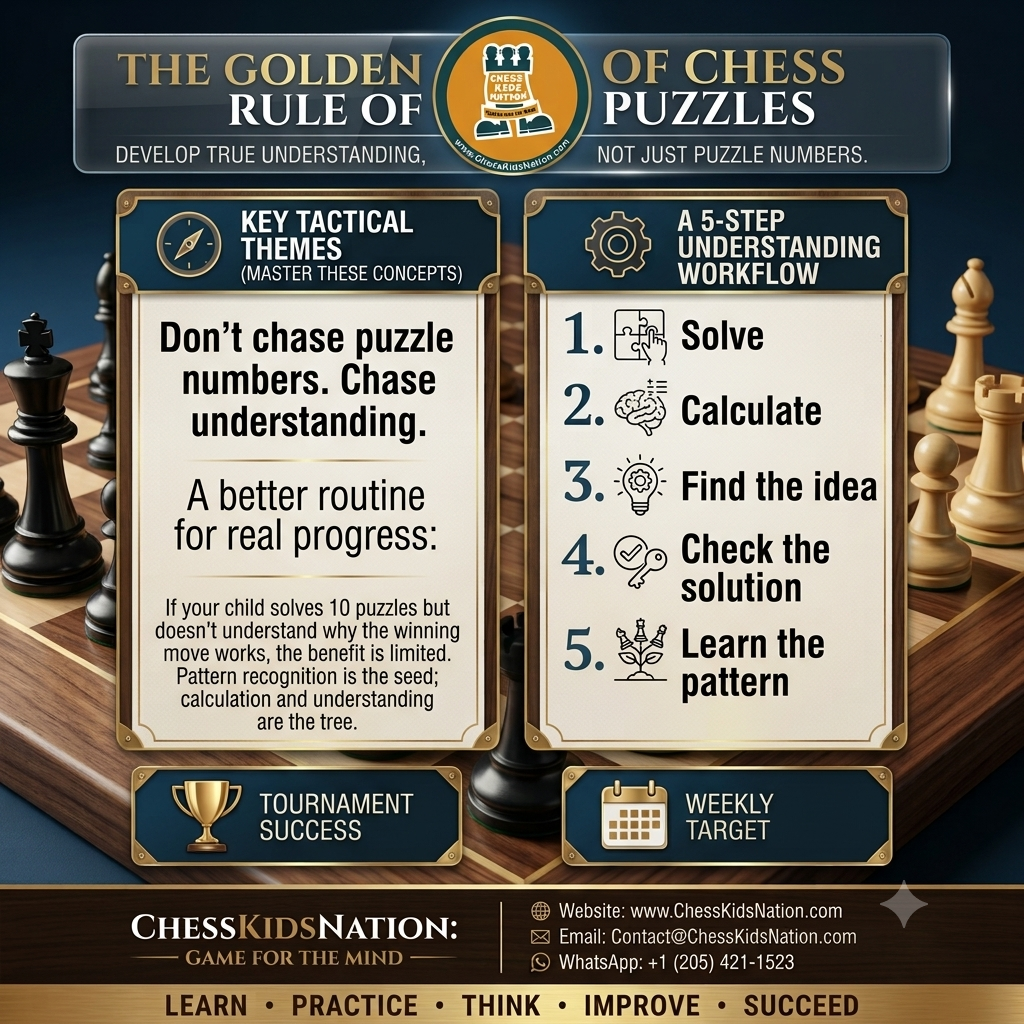
Don’t chase puzzle numbers. Chase understanding.
If your child solves 10 puzzles but doesn’t understand why the winning move works, the benefit is limited.
A better routine is:
Solve → Calculate → Find the idea → Check the solution → Learn the pattern
🏆 A Simple Weekly Goal
For most young chess players, a good starting target is:
10–15 quality puzzles × 5 days per week
That’s roughly 50–75 puzzles every week while still leaving time for games, analysis, openings, and other important areas of chess training.
🌍 Help Your Child Improve at Chess
At ChessKidsNation, we believe young players improve fastest when their training is structured, consistent, and enjoyable.
Our chess programs help children develop tactical vision, calculation, strategic thinking, and practical game skills through guided training and regular practice.
♟️ Learn. Practice. Think. Improve.
🌐 ChessKidsNation — Chess Education for Young Players Worldwide
