
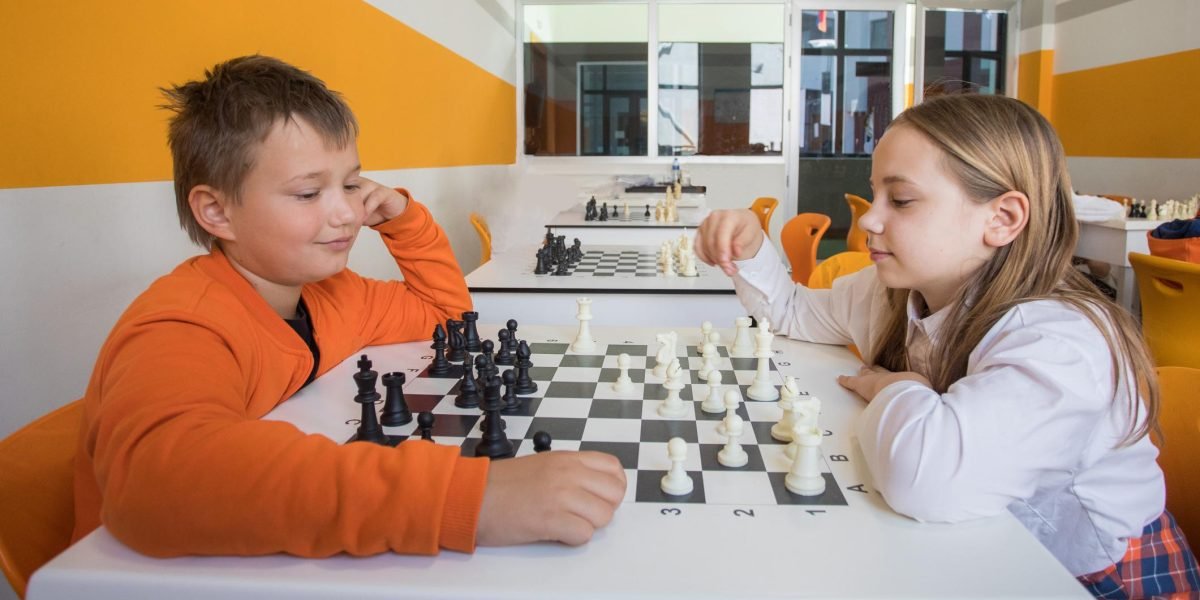
Why Chess Is One of the Best Brain Development Activities for Children
In today’s digital world, parents are constantly searching for activities that improve their child’s concentration, memory, and academic performance. Surprisingly, one of the most effective educational tools has existed for centuries:
Chess.
Chess is not just a board game. It is a powerful brain-training activity that helps children develop:
Focus and concentration
Critical thinking skills
Problem-solving abilities
Patience and discipline
Academic excellence
Studies and educational research continue to show that children who play chess regularly often perform better in school, especially in subjects like mathematics, reading comprehension, and logical reasoning.
🧠 How Chess Improves Focus in Kids
One of the biggest benefits of chess for children is improved concentration.
Unlike fast-paced mobile games that encourage instant reactions, chess teaches children to:
Slow down
Analyze situations carefully
Think before making decisions
Stay mentally engaged for long periods
During a chess game, one careless move can completely change the result. Because of this, children naturally build stronger attention spans and mental discipline over time.
Many educators and parents notice that kids who play chess regularly become:
✅ More attentive in class
✅ Better at completing homework
✅ Less distracted during studies
✅ More patient while learning
Research on chess education frequently highlights improvements in concentration and sustained attention among children who participate in structured chess training.
📚 How Chess Improves Academic Performance
Chess and Mathematics Skills
Chess is strongly connected with mathematical thinking.
While playing chess, children constantly:
Calculate variations
Recognize patterns
Analyze possibilities
Think logically
These same skills are essential in mathematics.
Educational studies suggest that chess training can positively influence math performance and analytical reasoning in students.
Children who play chess often become more confident in:
Mental calculation
Logical reasoning
Solving complex problems
Strategic thinking
Chess Helps Improve Reading and Memory
Many people think chess only improves math skills.
But chess also strengthens:
Reading comprehension
Memory retention
Cognitive flexibility
Pattern recognition
To play chess effectively, children must remember:
Opening ideas
Tactical patterns
Previous mistakes
Strategic plans
This repeated memory exercise helps improve overall brain function and learning ability.
🎯 Chess Develops Critical Thinking Skills
One of the greatest educational benefits of chess is that it teaches children how to think, not just what to memorize.
Every chess move requires:
Decision-making
Problem-solving
Prediction
Risk assessment
Children learn to ask:
“What happens if I make this move?”
“What is my opponent planning?”
“Is there a better solution?”
This habit of deep thinking helps students perform better in:
School exams
Classroom discussions
Science subjects
Competitive environments
Chess is widely recognized as a powerful tool for developing critical thinking and analytical reasoning in children.
🌟 Chess Builds Patience, Confidence, and Emotional Control
Chess also improves emotional intelligence in kids.
Children learn:
How to stay calm under pressure
How to recover from mistakes
How to handle wins and losses respectfully
How to stay patient while solving problems
These emotional skills are extremely valuable for academic success and personal growth.
Parents frequently notice increased confidence, discipline, and maturity in children who participate in chess activities regularly.
🏫 Why Schools Around the World Introduce Chess Programs
Many schools worldwide are now introducing chess into educational programs because chess combines:
Creativity
Logic
Focus
Discipline
Memory
Strategic thinking
All within one activity.
Educational discussions around school chess programs continue to highlight the positive impact chess can have on classroom behavior, learning engagement, and student confidence.
👨👩👧 Why Parents Should Encourage Kids to Play Chess
If you are searching for:
Activities that improve focus in kids
Brain development games for children
Educational activities outside school
Ways to improve concentration naturally
Chess is one of the best options available.
Unlike passive entertainment, chess actively trains the brain and teaches lifelong skills that help children succeed both academically and personally.
♟️ Final Thoughts: Chess Creates Smarter Thinkers
Chess is much more than a game.
It is a complete mental workout that improves:
✅ Focus and concentration
✅ Academic performance
✅ Memory and logical thinking
✅ Problem-solving skills
✅ Confidence and patience
Every chess game teaches children how to think carefully, stay disciplined, and make better decisions.
And those are skills that help far beyond the chessboard.
