
You’ve put in the hours. You know your favorite openings three to four moves deep. You don’t give away your queen in one-move blunders anymore, and you can spot basic tactical patterns like forks and skewers.
Yet, your rating graph looks like a flatline.
Welcome to the 1200–1600 Elo plateau—the most notorious quicksand in online and over-the-board chess. Whether you play on Chess.com, Lichess, or in USCF/FIDE tournaments, hitting this range is a rite of passage.
But why do so many passionate players get stuck here, and what does it actually take to break through to the coveted 2000+ club? Let’s break down the psychological and technical walls holding you back.
The “Hope Chess” Trap (Playing Without a Plan)
Below 1400, games are often decided by who makes fewer massive tactical blunders. If you wait around long enough, your opponent will likely hand you a piece.
Once you hit 1200–1600, however, opponents stop defeating themselves. They protect their pieces, develop logically, and look for active counters.
The plateau happens because players continue playing “hope chess.” They make a move because it “looks natural” or “attacks a piece,” hoping their opponent doesn’t have a response. To cross 1800, every move must serve a long-term strategic plan based on the weaknesses in the position, not just immediate threats.
Over-Reliance on Openings
Many players in the 1200–1600 bracket are absolute opening nerds. They memorize lines 12 moves deep into the Sicilian Defense or the King’s Indian.
The problem? The moment their opponent plays a sub-optimal or rare 5th move, the memorization ends. Because they memorized the moves rather than understanding the underlying middlegame concepts, they find themselves lost in uncharted territory. If you spend 80% of your study time on openings, you are actively stalling your growth. Real chess begins when the opening theory ends.
Superficial Tactical Vision
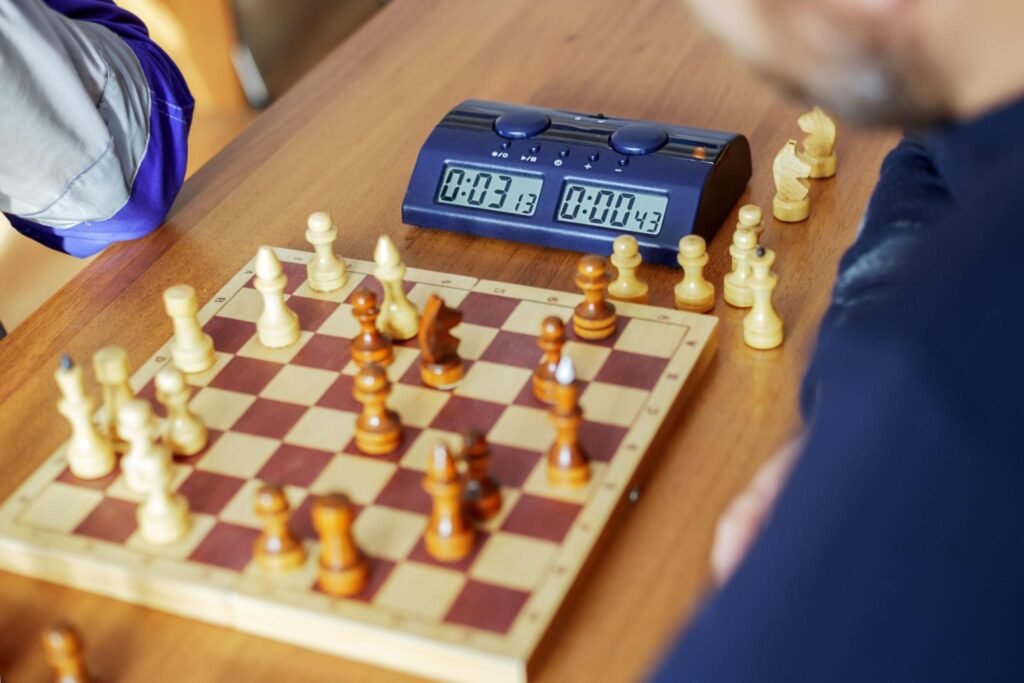
Players at this level are good at puzzles. If you tell them, “White to play and win,” they can find the combination
But in a real game, nobody taps you on the shoulder and tells you a tactic is available. At 1200–1600, players often calculate the first two moves of a variation and assume everything works out. They fall victim to what Grandmasters call “candidate move blindness”—failing to look at the opponent’s forcing responses (checks, captures, and threats) at the end of their calculated line.
Total Lack of Endgame Competence
Let’s be honest: studying endgame theory isn’t as thrilling as learning a sharp gambit.
Consequently, 1400-rated players frequently convert a completely winning endgame into a draw, or blow a drawish position into a loss. They lack a fundamental understanding of:
King activity and opposition.
Rook endgame dynamics (cutting off the king, Philidor & Lucena positions).
Creating and escorting passed pawns.
If you cannot convert a +1 advantage into a win in the endgame, you will remain trapped in the 1600s forever.
Playing Too Much, Analyzing Too Little
If you are stuck at a plateau, playing 20 blitz games a day is not going to fix it. It only reinforces your bad habits.
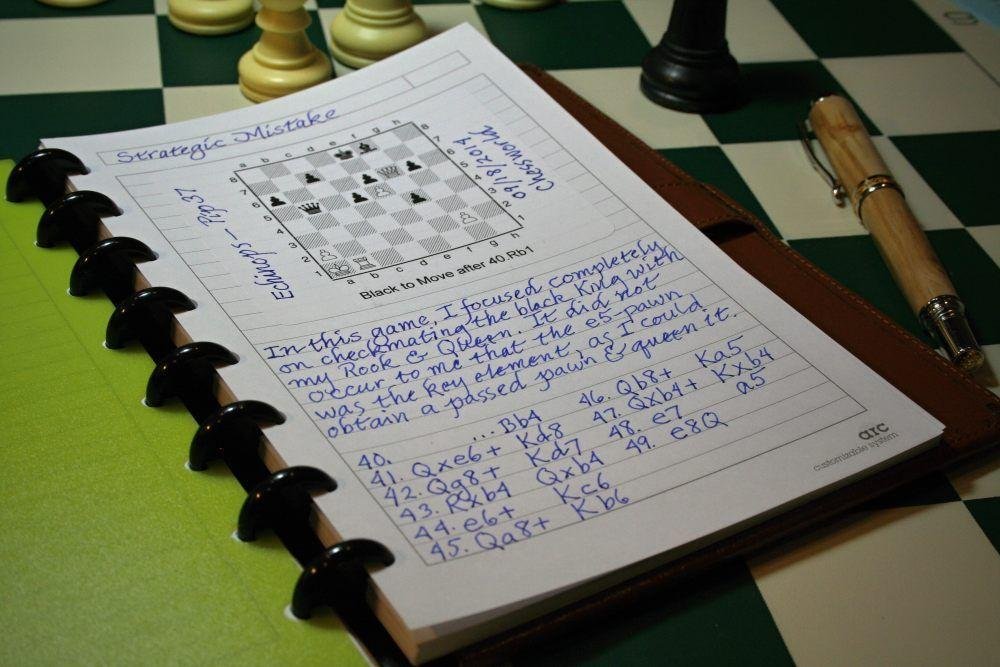
Most players hate analyzing their losses because it hurts their ego. But your losses contain the exact blueprint of your weaknesses. Without analyzing your games—without an engine first, to understand your human thought process—you cannot diagnose why you are losing.
How to Shatter the 1600 Ceiling: Your Action Plan
If you want to break into the 1900–2000+ tier, you must shift how you practice:
Adopt a 20/40/40 Study Rule: Spend 20% of your time on openings (focusing on the plans, pawn structures, and typical pieces to trade), 40% on middlegame strategy/tactics, and 40% on endgames.
Never Play “Hope Chess”: Before making your move, explicitly ask yourself: “What is my opponent’s most annoying response?” If you don’t like the answer, find a different move.
Analyze Every Serious Game: Spend at least half as much time analyzing a game as you did playing it. Write down what you were thinking during critical moments before turning Stockfish on.
Study Classical Master Games: Pick up a book of analyzed games (like Logical Chess: Move by Move by Irving Chernev or collections by Bobby Fischer/Garry Kasparov). Seeing how masters formulate plans will fundamentally change how you view the board.
Final thoughts
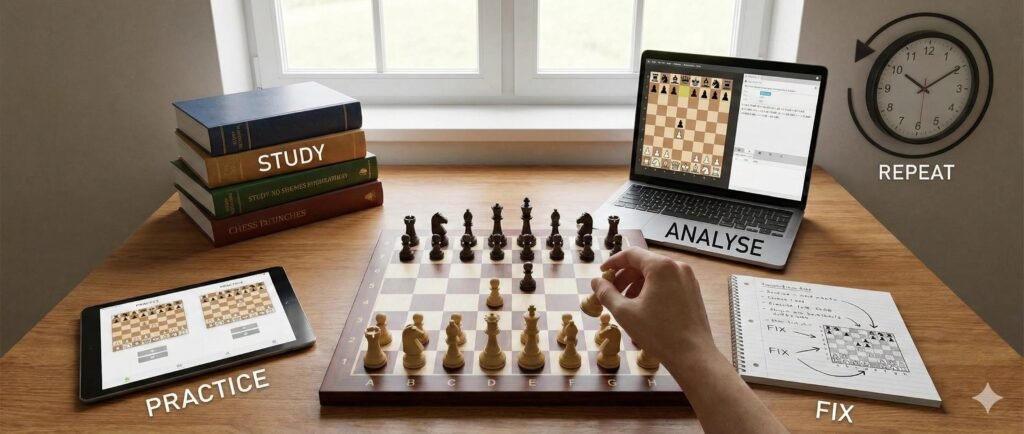
Breaking a chess plateau isn’t about learning more tricks; it’s about rebuilding your thought process. Shift your focus from memorization to deep understanding, and watch your rating take flight.
